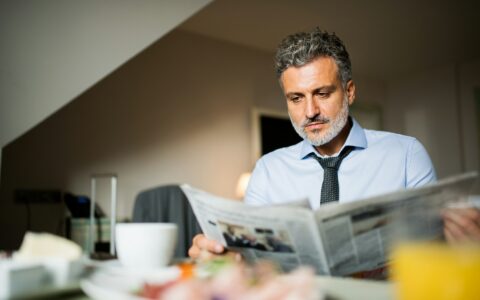

When Today’s Headlines Feed Your Existential Anxiety
Peter Cooper
There is a constant barrage of notification pings signaling a crisis is unfolding somewhere in the world. With one phone ding, you are spiraling into questions about life’s meaning and purpose. Along with that, you wonder if anything really matters.
You are not alone in experiencing this existential anxiety that results from a relentless news cycle. This goes beyond ordinary worry regarding what’s going on in the world. It is a deep questioning of existence itself that is amplified by the constant exposure to dark moments in humanity.
You live in a time where information travels faster than wisdom. Every time there is a tragedy, conflict, or suicidal breakdown, you are notified instantly on your phone. Wanting to keep up with the news creates a burden that previous generations didn’t have.
It’s a constant exposure that doesn’t just inform, but it also transforms how you see your faith in yourself and God’s plan. As a result, every crisis feels overwhelming and isolating. We were not created to live a life of anxiety.
Do not be anxious about anything, but in everything by prayer and supplication with thanksgiving let your requests be made known to God. And the peace of God, which surpasses all understanding, will guard your hearts and your minds in Christ Jesus. – Philippians 4:6-7, ESV
The 24/7 News Cycle and Your Spiritual Well-Being
God did not design your nervous system to carry the emotional weight of global suffering that is being delivered to you hourly through technology. Consuming news constantly is essentially carrying burdens that God never intended for you to bear.
This traditional news consumption was once something that occurred once or twice. The issue is deeper than an information overload. It creates a spiritual disconnect, and you begin to question whether prayer matters, whether God cares, and whether your life has any meaning in this chaotic world.
Traditional news consumption in previous generations happened once or twice daily. Today, you’re bombarded with updates, analysis, and commentary 24 hours a day. The only way that you get a break is to put your phone down.
This constant consumption of news creates a state of hypervigilance that is not aligned with the peace that Christ promised. You become compulsive about checking for updates because of the fear of missing out on catastrophic information.
Psychologically, this impact mirrors what counselors see in trauma survivors – a constant mental state of fight or flight that ends up exhausting your entire being. Being perpetually braced for the next crisis keeps you at a loss for the ability to rest in God’s promises.
This is a natural response to unnatural stimulation. It doesn’t mean it is a weakness. Your soul craves rhythm and rest, along with the trust that scripture describes. However, modern media demands that you have a constant alertness to the threats.
Christian counselors have noted that there is an increase in believers struggling with the news-induced anxiety that creates existential questioning. This leads you to wonder if your daily concerns even matter when children are suffering worldwide, or if your prayers have any influence when evil seems so pervasive. This is a spiritual burden disguised as global awareness.
You keep him in perfect peace whose mind is stayed on you, because he trusts in you. – Isaiah 26:3, ESV
When Headlines Challenge Your Faith in God’s Sovereignty
Every disaster reported, and every injustice exposed, creates cognitive dissonance with your belief in a loving and all-powerful God. You find yourself asking questions that previous generations of believers rarely faced.
- If God is in control, why does He allow such suffering?
- If He cares about justice, why did the wicked seem to prevail?
These questions aren’t new, but they do feel more pressing when you’re confronted with evidence of the darkness of humanity constantly.
Existential anxiety is the result of this constant exposure to global suffering. This anxiety is a deep question of life’s meaning and purpose, and for Christians, it manifests as doubt about God’s character. It causes you to question His promises and His involvement in human affairs. This can prompt thoughts about your faith, hope, and whether the biblical worldview can withstand the realities of this world.
 This leaves you feeling isolated because it challenges your core beliefs. You may find yourself hesitating to voice these doubts because you fear they indicate a weak faith rather than a normal human response to the overwhelming consumption of information. This cultural message suggests that being informed is always beneficial, but scripture advises us to guard our hearts and minds carefully.
It’s not the news itself. It is the constant negative information shaping your perception of reality. If the primary input about the world is constantly crisis-focused, you will develop a mindset called “mean-world syndrome.”
This syndrome focuses on the belief that the world is more dangerous and corrupt than it is. It creates a distorted perspective and makes it difficult for you to maintain hope and trust the peace that comes from knowing God is ultimately in control.
Cast all your anxieties on him, because he cares for you. – 1 Peter 5:7, ESV
The Comparison Trap of Social Media News and Existential Anxiety
News consumption has been transformed by social media from passive to active comparison. You’re not just reading about global issues; you are seeing how others are responding, causing you to judge your own reactions. This judgment creates pressure to engage with every crisis appropriately. The result is a form of existential anxiety where you question your adequacy to respond to these global issues.
A post about a humanitarian crisis, while sitting in the comfort of your home, creates guilt mingled with helplessness. You feel that others have the perfect response, support the right charity, and have the correct political position and the most compassionate reaction.
You feel overwhelmed, under-informed, and inadequate. It is a comparison trap that feeds existential anxiety and suggests that your life lacks sufficient purpose or impact.
Social media creates a performative nature that adds another layer of complexity to news consumption. It’s the pressure you feel to demonstrate appropriate concern by sharing the right articles and showing that you do care about global issues.
However, this external focus often disconnects you from the internal work of processing information through a biblical worldview. You began to filter news through social expectation and peer responses instead of prayer and scripture.
Christian counselors have seen an increase in believers struggling with “compassion fatigue.” This fatigue is an emotional exhaustion from caring about too many distant problems simultaneously. God did not design your heart to carry the weight of every global tragedy, but social media suggests that caring Christians should be constantly aware.
Peace I leave with you; my peace I give to you. Not as the world gives do I give to you. Let not your hearts be troubled, neither let them be afraid. – John 14:27, ESV
Finding Peace When the World Feels Out of Control
To break free from this news-induced existential anxiety takes intentional boundaries. It will require a return to biblical wisdom about information consumption. This is where you will have to choose between being informed and being overwhelmed. It is choosing between showing compassion and carrying burdens God never intended for you to bear.
This doesn’t require you to become indifferent to suffering, but it does ask that you approach global issues from a place of peace.
One way to break free is to establish specific times for news consumption. Give your mind space to process information through prayer and scripture rather than piling one crisis on top of another. This will give you room for wisdom to develop alongside knowledge and prevent the emotional overload that feeds existential questioning.
Make sure you consider the sources of your news consumption carefully. Most media companies profit from your attention, and the anxiety-inducing content will keep you engaged. Choose the sources that will inform you without sensationalizing the situation. You want to avoid endless commentary cycles that amplify fear and disregard understanding. The goal is for you to be reasonably informed, not constantly updated every moment of every situation.
Prayer is crucial in processing global events through a biblical lens. When you pause to ask God for perspective on what you see, the result is the ability to hear without doubting anxiety. You can approach world events with a position of trusting in God rather than fear of human chaos.
It is important to remember that existential anxiety doesn’t indicate a weak faith. It reveals a deep need for God’s perspective on earthly events. Believers who never struggle with doubt have never grappled seriously with the reality of suffering in a fallen world. When you bring anxiety honestly before God, He will create a pathway to deeper trust.
References:
https://www.psychologytoday.com/us/blog/anxiety-zen/202010/how-news-consumption-impacts-mental-health
https://www.verywellmind.com/how-to-cope-with-news-anxiety-5176310
https://psychcentral.com/anxiety/how-to-stop-anxiety-from-the-news
https://www.webmd.com/mental-health/news/20220228/doomscrolling-linked-to-poor-physical-mental-health
https://www.headspace.com/articles/news-anxiety
Photo:
“Morning News”, Courtesy of Getty Images, Unsplash.com, Unsplash+ License